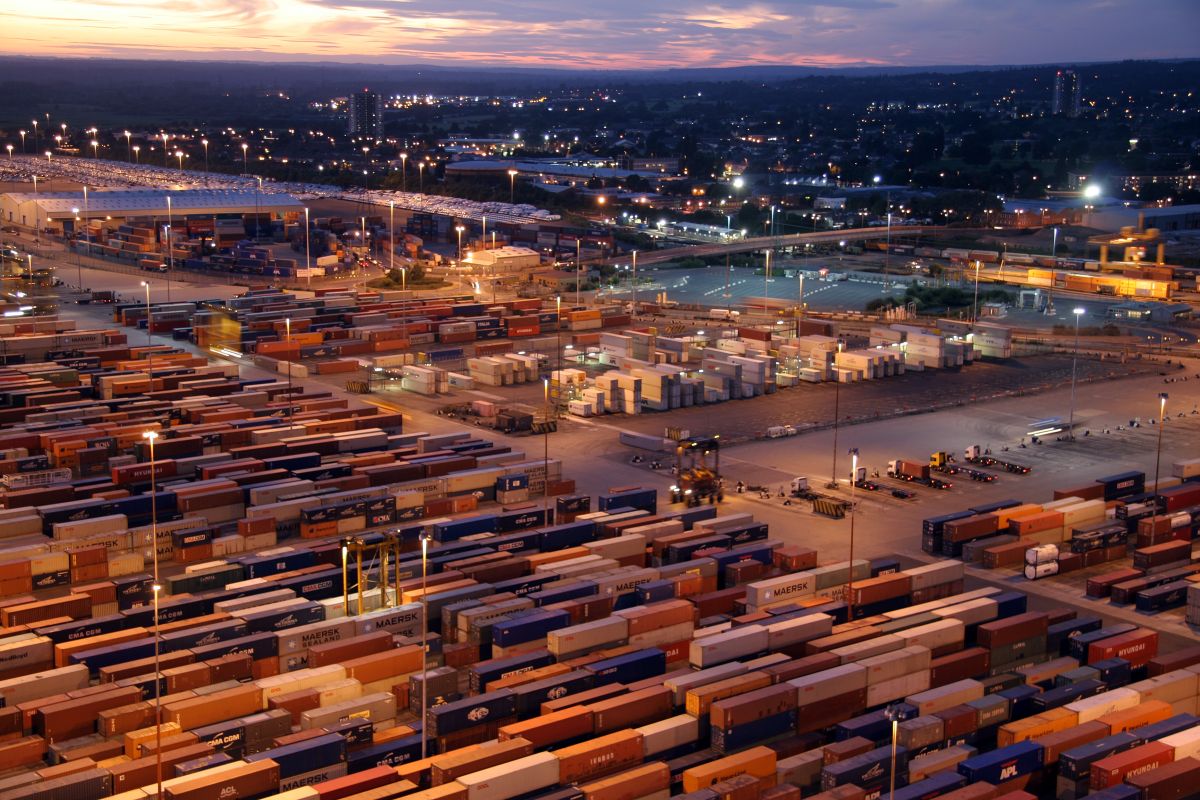
DP World has launched what it describes as the first port-based carbon inset scheme at its Southampton terminal, giving customers the ability to count a share of verified emissions reductions towards their own supply chain targets.
The new Container Terminal Inset Certificates are based on carbon savings generated at the port through measures such as the use of biofuels including HVO, port-wide electrification and renewable electricity generation. These reductions are then converted into certificates allocated to customers moving qualifying cargo through Southampton.

From a logistics perspective, the move reflects a broader shift towards more granular decarbonisation accounting across supply chains, where ports are no longer treated only as transfer points but increasingly as active contributors to emissions reduction strategies. DP World said the certificates will support customer reporting of Scope 3 emissions.
The Southampton certificates are being folded into DP World’s wider Carbon Inset Programme, launched in partnership with 123Carbon in January 2025. According to the company, the programme has already registered more than 250,000 TEU in its first year and issued over 9,000 tonnes of CO₂e savings, leading to the scheme being extended to the end of 2026.
For the freight sector, the significance lies in the attempt to create a verified mechanism for sharing emissions reductions across road, rail and sea-linked logistics chains. DP World argues that ports have a growing role to play in lower-carbon logistics, particularly where infrastructure operators are investing in electrification and cleaner fuels.